Don’t let the name fool you—Joe-Pye weed isn’t a weed at all! With its towering lavender blooms and irresistible appeal to butterflies and bees, this native perennial brings drama and charm to any garden. Let’s dig into what makes Joe-Pye weed a gardener’s delight and how to grow it successfully.
About Joe-Pye Weed
The common name Joe-Pye weed refers to various perennials in the genusEutrochium. This native American plant is a moisture-loving perennial in the Asteraceaefamily, and it’s generally hardy in USDA Zones 3 to 9. (This can vary slightly depending on the species—some are best in Zones 3 to 8, others are happier in Zones 4 to 9.)
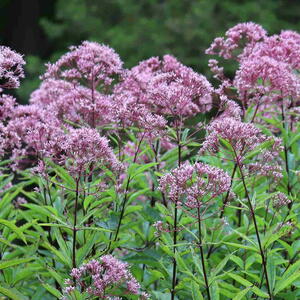
Joe-Pye weed produces large lavender-purple blooms in the summer and early autumn. It bears narrow leaves up to 10 inches long on a tall, erect stem. The domed flower head is made of several branches, each with small florets.
Pollinators go nuts for Joe-Pye weed, including native bees, butterflies, and songbirds. In addition, this herb is both rabbit- anddeer-resistant. Many species exist, and they generally share the same requirements for planting and care, but they vary in terms of size:
- Joe-Pye weed can grow from 2 to 7 feet tall. Its flowers and foliage bring color and beauty to the garden, and its height adds drama to groupings, the back of borders, or rain gardens.
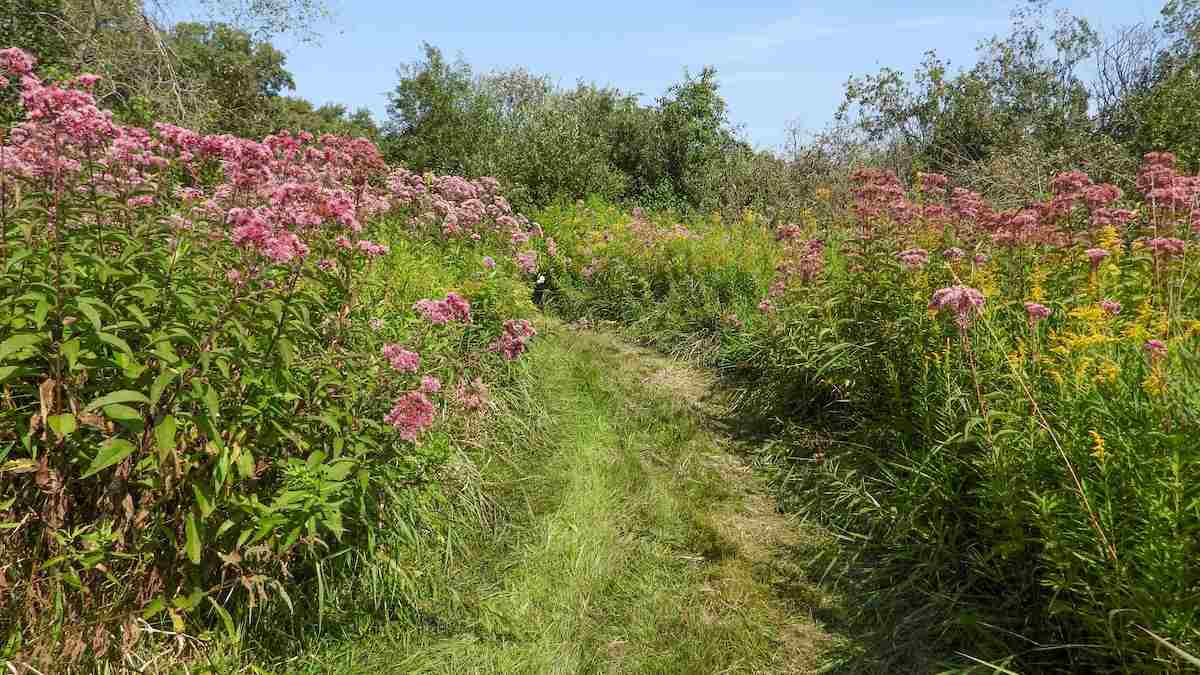
Joe-Pye weed thrives in moist meadows is a wildlife food source. Credit: Brian Woolman
- There are also shorter varieties 1 to 3 feet tall, with names such as ‘Little Joe’, ‘Baby Joe’, and ‘Phantom’. They work well in perennial borders, along paths, in woodland gardens and mixed containers, and amidst rain gardens.
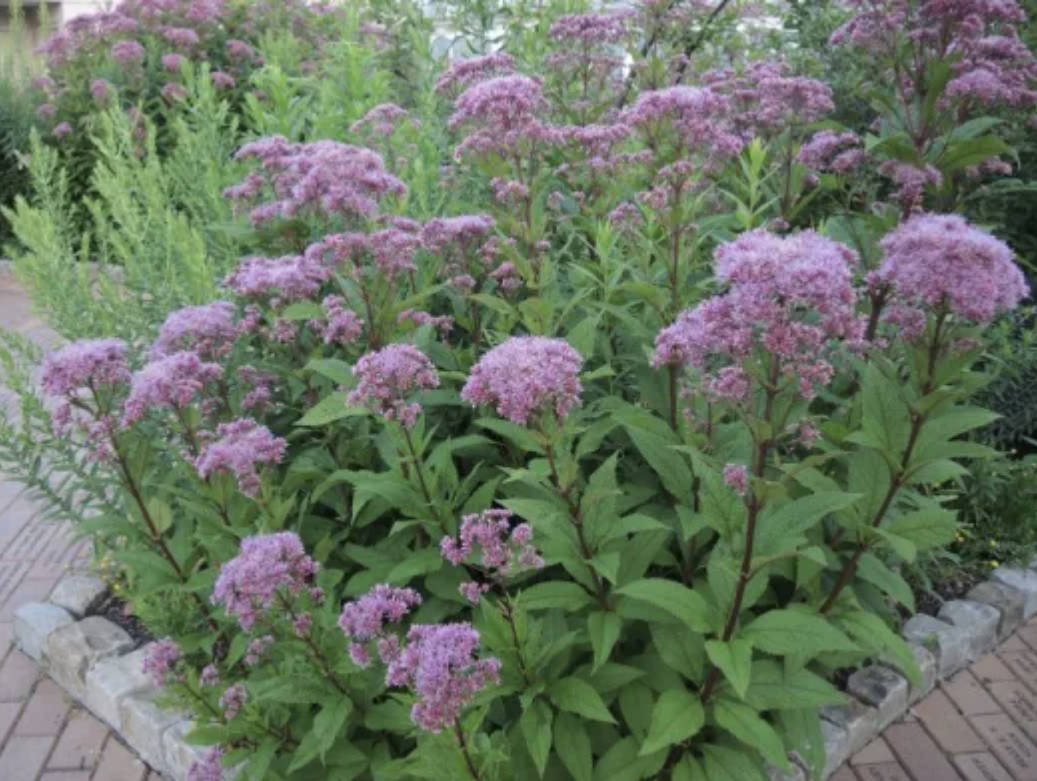
‘Little Joe’ isn’t a hybrid or invented. This more compact version was discovered!
Ease of care is perhaps one of Joe-Pye weed’s best attributes. It doesn’t require much attention and thrives in the right conditions. Joe-Pye weed is not toxic to humans, cats, and dogs. In fact, it’s an herbal plant with a long history of medicinal uses, mainly related to fever, kidney stones, and urinary disorders.
Is Joe-Pye Weed Invasive?
No, this plant is NOT categorized as an invasive. It is native to the eastern United Statesfrom Maine to Florida, west to Illinois, and east Texas, while others are found across a broad geographic range in North and South America. That said, outside its native area, it can aggressively reseed in the right conditions. If your goal is for the plant to spread, let it go; if it is to contain it, then be aggressive about removing it. Finally, to avoid any reseeding, trim off the spent flowers, and it won’t produce seed.
Planting
It’s easy to plant Joe-Pye weed and you can choose to propagate three ways: by seed, by division, or by stem cuttings. Division is undoubtedly the easiest, but seeds are a good option, too. Stem cuttings are a less common option.
When to Plant
- If you want to direct sow seeds in your garden, plant Joe-Pye weed in the fall. This is a departure from common practice, but this provides the seeds with the necessary cold stratification. Just plant in fall and watch for your seeds to germinate in the spring. Plants should bloom even in the first year.
- If starting the seeds indoors in a container, the seeds will need to be cold stratified. This isn’t complicated to do; you’ll just need to refrigerate your seeds for several weeks before planting. The University of Illinois Extension explains the process here.
- If you want to direct sow in the spring, be sure to do so early enough that the seeds will still receive some cold temperatures.
How to Plant
- Joe-Pye weed grows well from seed; the seeds are tiny and delicate with tiny “sails.”
- For seeds, germination rates can be low, so plant plenty! You can thin out later.
- Seeds should be covered extremely lightly or not at all. They require warm temps (over 70°F) and light to germinate.
- You can also purchase live plants and transplant them into your garden with good success; this is probably the easiest method.
- You can transplant the seedlings outdoors about 2 months after germination, but be sure to let them acclimate first.
- Joe-Pye weed grows 3 to 4 feet wide when mature, so bear this in mind when spacing.
- If you have access to established plants (maybe from a neighbor), division is a great way to propagate new plants. You can do this in spring or fall.
- It self-seeds, so keep an eye out for runaways that might want to spread throughout your garden.
Growing
Joe-Pye weed generally takes care of itself and does well even when somewhat neglected. But to give it the best possible conditions and care, here are a few tips:
- Joe-Pye weed likes moist/wet soil that’s also well-draining.
- Consistent watering is extra important during the first year, and the plants should be kept moist even after that.
- Aim for a full sun location, but partial shade can be okay if you live in a hot climate.
- Taller varieties of Joe-Pye weed might need staking to keep them from bending under the weight of their flowers.
- Fertile, loamy soil is good, but the correct moisture is most important.
- Joe-Pye weed is not fussy about soil pH—it is happy in acidic, alkaline, or neutral soils with a wide range of pHs.
- Joe-Pye weed dies back each year and regrows from the roots, so late fall is a fine time to cut it back within a few inches of the ground.
- The stalks can also be left for birds to enjoy over the winter.
- Deadheading during the growing season is a nice way to keep the plants tidy, and it offers the side benefit of preventing self-sowing (unless you want Joe-Pye weed to travel around your garden, which is also fine).
- If you have a taller cultivar, it would benefit from a “Chelsea Chop” any time before the first of June.
Types
Here at theAlmanac, we enjoy ‘Ruby’ for larger perennial gardens, ‘Gateway’ as a mid-sized variety, and ‘Little Joe’ for smaller gardeners, borders and containers.
- Eutrochium purpureumis a commonly seen native species and is also known as Sweet Joe-Pye weed. In the garden, a popular variety is ‘Ruby’. Height is 24 to 32 inches, and spacing is 24 to 28 inches.
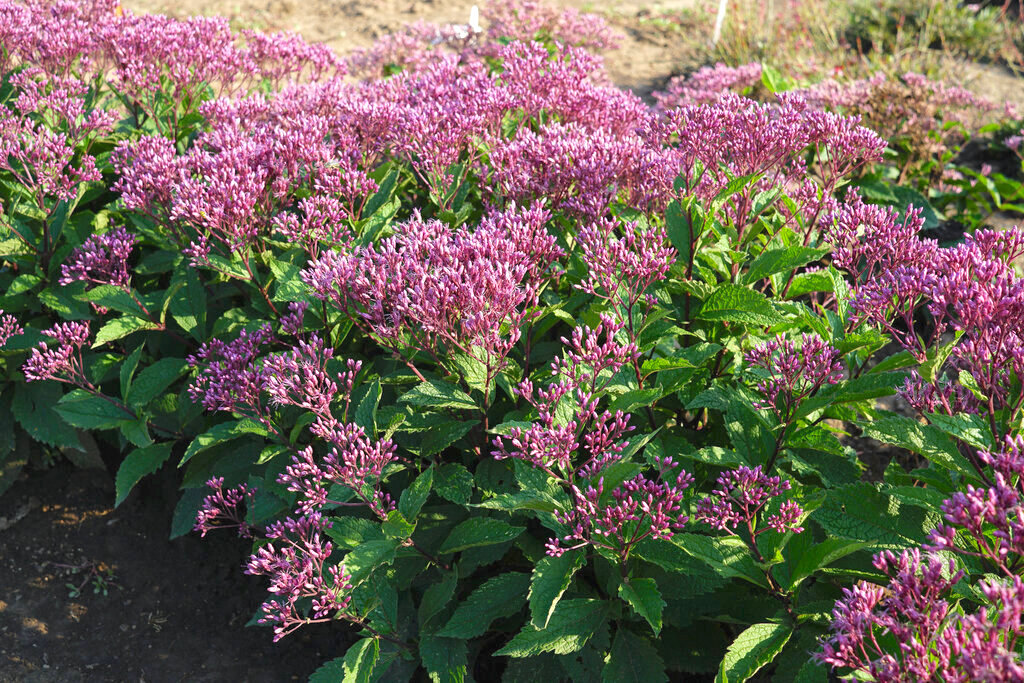
‘Ruby’ Joe-Pye Weed, a taller variety. Credit: Proven Winneres.
- Eutrochium fistulosumis taller, up to 10 feet tall. It’s called “hollow” or sometimes “giant” Joe-Pye weed.
- Eutrochium maculatumis known as ‘Gateway’ and has red stems. It’s 4 to 6 feet tall and may offer some resistance to powdery mildew.
- Eupatorium rugosumis known as chocolate Joe-Pye weed and bears stunning white flowers contrasting against deep purple foliage. It’s 3 to 5 feet tall.
- Eutrochium dubiumis called ‘Little Joe’, ‘Baby Joe’, or ‘Coastal Plain’ Joe-Pye weed. It only reaches 3 to 6 feet tall and is popular in garden areas where you need a mid-sized plant.
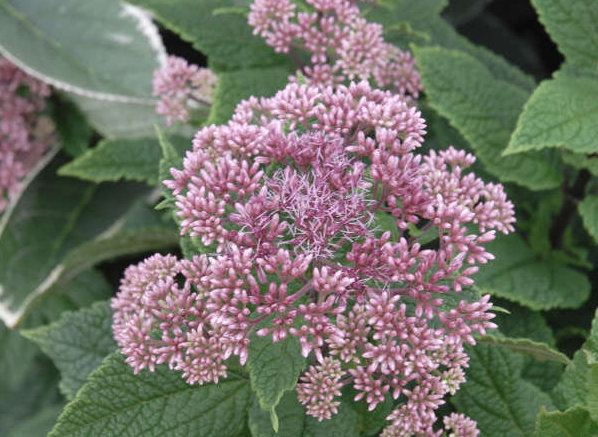
‘Little Joe’ Joe-Pye Weed. Credit: Proven Winners
Pests/Diseases
Joe-Pye weed is generally quite resistant to critter damage. Deer don’t bother it (I can personally vouch for this: if they did, my Joe-pye weed would be LONG gone, as I don’t have it protected inside a fence). Rabbits aren’t typically an issue either. Plant diseases are also minimal.
- Leaf scorch can be a problem.
- Powdery mildew is probably the most common disease affecting Joe-Pye weed, particularly if the plant is grown in the shade.
- Fungal diseases like leaf spot or rust are sometimes an issue.
FAQ
Is Joe Pye weed invasive?
No, Joe Pye weed is not considered invasive. It’s a native North American wildflower that spreads easily but generally stays well-behaved in gardens.
Does Joe Pye weed come back every year?
Yes! Joe Pye weed is a hardy perennial. Once planted, it will return and bloom year after year.
How tall does Joe Pye weed grow?
Depending on the variety, Joe Pye weed can reach anywhere from 3 to 8 feet tall.
Does Joe Pye weed attract pollinators?
Absolutely! Joe Pye weed is a magnet for butterflies, bees, and other pollinators thanks to its large clusters of nectar-rich flowers.
When does Joe Pye weed bloom?
Joe Pye weed typically blooms from mid-summer through early fall, providing late-season color.
Wit and Wisdom
- This plant’s unusual name, “Joe-Pye weed,” comes from a Native American sachem (leader) named Joseph Shauquethqueat, known as Joe Pye. The Mohicans are an Eastern Algonquian Native American tribe that historically spoke an Algonquian language. Traditionally, this plant was used as a medicinal herb to cure various ailments.
- According to the NC State Extension, the nameEutrochiumcomes from the GreekEu+troche, meaning “wheel-like” (referring to the whorl of the leaves).
- Joe-Pye weed is grown in the Upper Garden of Washington’s Mount Vernon estate in Virginia and in the gardens of Jefferson’s Monticello.
- Some people say Joe-Pye weed smells like vanilla.
- Mix Joe-Pye weed with other taller, late-blooming perennials. We like goldenrod, coneflower, black-eyed Susans, asters, and grasses. The butterflies and bees will thank you, and don’t be surprised if you have more blooms and a bigger harvest!